

Piering & Underpinning
Understand when deeper load transfer may be considered and which site, structural, access, and professional inputs belong in a piering scope.
Explore the scope →Heat, moisture, cold, slope, drainage, soil, fill, and construction can all provide context. Only an appropriate on-site review can assess a specific property.
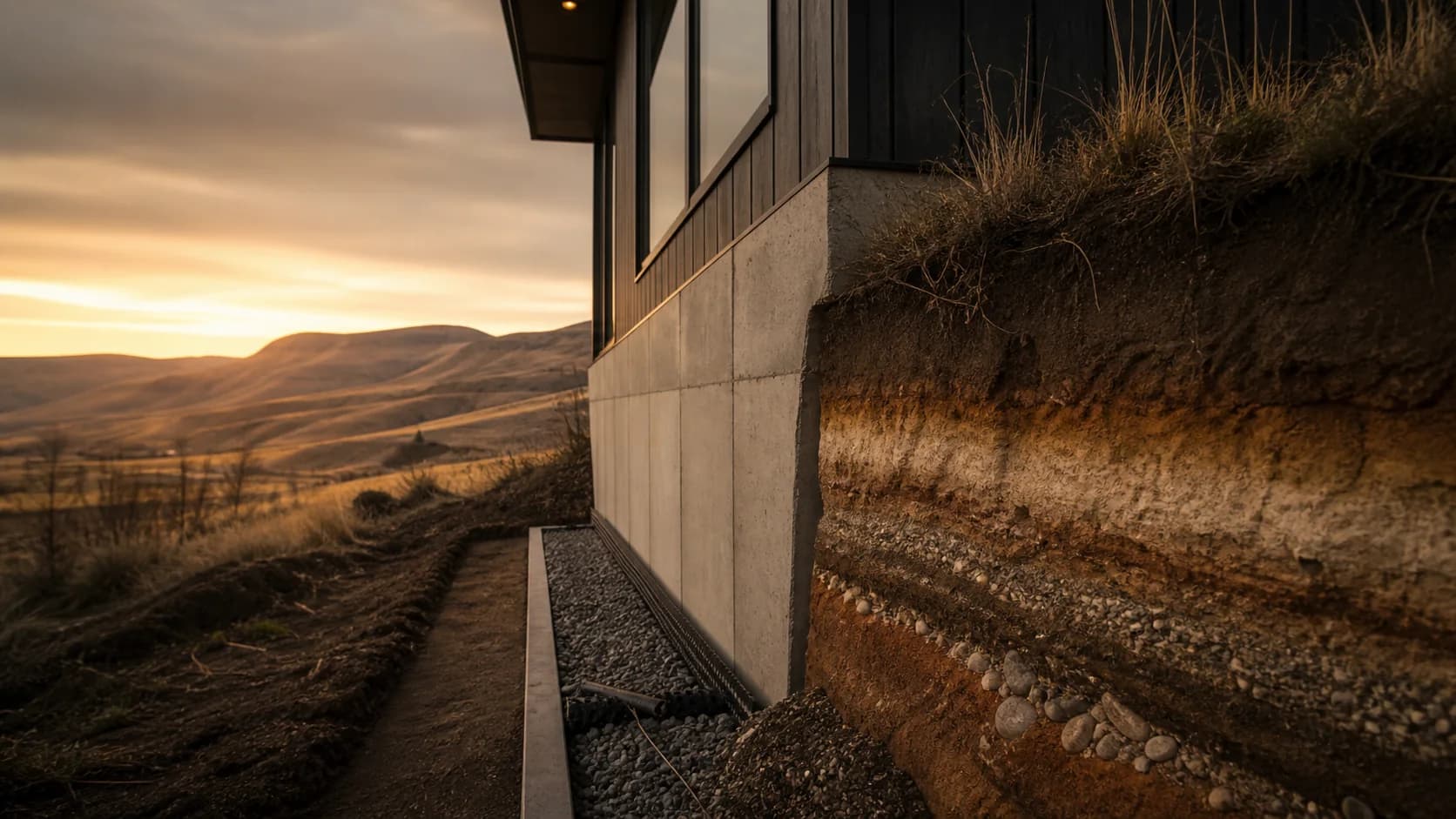
AI concept visualization · not completed company workSpring moisture can make timing, snowmelt routes, and new leakage useful parts of the property record.
Each service is framed around visible evidence, property conditions, and specialist boundaries that should shape the scope.
Understand when deeper load transfer may be considered and which site, structural, access, and professional inputs belong in a piering scope.
Explore the scope →Organize crack pattern, timing, moisture, and nearby changes before a repair method or professional boundary is chosen.
Explore the scope →Learn which measurements, drainage observations, structural questions, and design responsibilities belong in a wall-stabilization review.
Explore the scope →Review grading, roof-water discharge, irrigation, slope, and existing drainage alongside—not in place of—structural questions.
Explore the scope →Prepare crack, level, drainage, and timing observations for an appropriate on-site professional assessment.
Explore the scope →Select a project conversation. The ledger shows what should be explicit before methods or totals are compared.
What support method is proposed, and which site conditions must be confirmed first?
Which loads, soil conditions, and construction details are assumed rather than verified?
Who provides engineering or geotechnical design, review, and required documentation?
How will equipment, excavation, utilities, and adjacent finishes be managed?
What observations, records, or professional sign-off define whether the work matches the scope?
Which backfill, surfaces, landscaping, and interior finishes are included or excluded?
Which unknown conditions can change the scope, and what do the written warranty terms cover?
Select what you observe. The desk organizes useful photographs, dates, and property context while keeping professional boundaries clear.
Record its route and repeat the same photograph before the surface is covered or repaired.
The process prepares a grounded conversation while leaving decisions that require on-site or specialist review in the right hands.
Record visible cracks, openings, floors, moisture, dates, and nearby property work. Photos organize observations but cannot confirm a cause.
A qualified on-site reviewer can determine which measurements, records, structural questions, or geotechnical inputs are appropriate.
Ask each proposer to state the method, assumptions, design responsibility, permits, access, verification, restoration, exclusions, and warranty terms.
Before authorizing work, confirm contractor and professional credentials, permit requirements, change procedures, documentation, and payment terms.
High-trust foundation work makes uncertainty visible and useful—it does not pretend a webpage can name the cause.
Movement and moisture clues are considered against Kamloops heat, drying, freeze, and slope context.
The process identifies when engineering or geotechnical input belongs in the project.
Assumptions and exclusions stay visible so homeowners can compare methods—not only totals.
Useful preparation, without invented certainty.
There is no single city-wide cause. Site-specific soil or fill, slope, drainage, irrigation, roof-water discharge, construction details, loads, and seasonal conditions can all matter. Some Kamloops hazard areas also have specific geotechnical requirements. An appropriate on-site professional must assess the property before cause or repair suitability is stated.
Cost depends on the confirmed condition, design and professional inputs, access, excavation, utilities, materials, quantity, permits, inspection, and restoration. A crack seal, engineered stabilization scope, and drainage project are not comparable products. Obtain a written, property-specific scope and ask what concealed conditions can change the price.
No website can classify urgency from a crack description alone. New or widening displacement, bowing, sudden changes, loss of support, or other signs of instability warrant prompt assessment by an appropriately qualified professional. If an area appears unsafe, keep people away and contact the appropriate emergency or public-safety service; this website does not provide emergency response.
The site explains both topics because they may need to be reviewed together. A visible crack does not prove a drainage cause, and drainage work does not replace structural repair when load transfer or reinforcement is required. The on-site assessment should define the relationship and the responsible contractor or professional roles.
Requests can describe properties in Kamloops neighbourhoods such as Brocklehurst, Sahali, Westsyde, Valleyview, Barnhartvale, and Aberdeen, as well as the separate municipality of Chase. Listing a place does not promise completed work or confirm a suitable repair method. Permit and professional requirements must be confirmed for the property's jurisdiction.
Disruption depends on the confirmed method, interior or exterior access, excavation, utilities, occupied-area protection, and restoration. Require a written proposal to identify access, dust or water control, temporary protection, working hours, exclusions, and who restores each affected finish or surface.
One short request captures the property essentials. The request is confirmed only after it has been saved successfully.
Call (778) 900-3103 ext. 211